
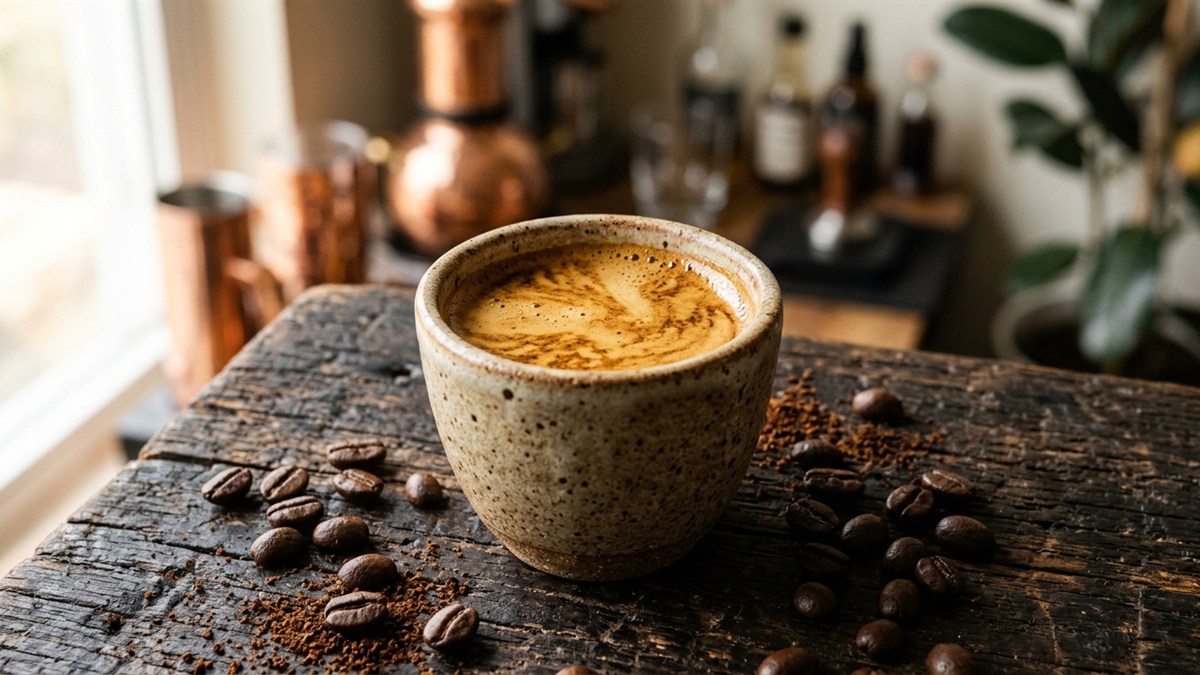
For many coffee drinkers, stepping up to a specialty café counter and ordering an espresso, flat white, or cappuccino is a seamless, effortless ritual. Within a few short minutes, the barista presents a steaming ceramic cup crowned with a dense golden crema or intricate latte art. Yet, behind those few ounces of concentrated liquid lies an extraordinary culinary journey combining organic chemistry, precision thermodynamics, physics, and sensory artistry. This is the craft of barista coffee in Bengaluru.
At Roast Aroma Café & Pizzateria in Banashankari 6th Stage, we believe that great coffee is never an accident. Every exceptional cup is the result of disciplined technique applied to carefully cultivated Arabica coffee beans. In this guide, we take you behind our espresso bar to explore the complete journey of how coffee travels from raw farm harvest to a masterfully pulled espresso drink.
The Foundation: Selecting Single-Origin Estate Arabica Beans
The journey of barista coffee begins in the misty, forested slopes of the Western Ghats in Karnataka. Here, in historic coffee regions like Chikmagalur and Coorg, Arabica coffee cherries grow under the protective canopy of indigenous shade trees at elevations exceeding 3,500 feet above sea level.
High elevation plays a crucial role in bean quality. Cooler mountain temperatures slow down the maturation process of the coffee cherry, allowing complex sugars, amino acids, and aromatic organic acids to develop within the seed. Once hand-picked at peak ripeness, the cherries undergo processing—either washed (wet processed) for clean acidity and fruit clarity, or natural (dry processed) for enhanced sweetness and heavy body. At Roast Aroma, we prioritize responsibly sourced, high-grade Arabica beans that deliver a rich, balanced flavor profile with notes of dark chocolate, toasted nuts, and subtle berry undertones.
The Science of Precision Coffee Grinding
Once roasted and rested, coffee beans enter the barista’s domain. The first and most critical mechanical step in preparing espresso coffee is grinding. Contrary to popular belief, a coffee grinder does not simply chop beans into small pieces; it shears them into hundreds of thousands of uniform microscopic particles.
For espresso extraction, grind size must be calibrated with micrometric precision. If the grind is too coarse, water flows through the coffee bed with little resistance, resulting in under-extraction—a sour, watery, thin cup with pale crema. If the grind is too fine, water cannot penetrate the compacted bed, causing over-extraction—a bitter, astringent, burnt-tasting liquid. A professional barista tests and recalibrates the grinder multiple times each day, accounting for ambient room temperature and humidity shifts in Bengaluru to maintain perfect extraction flow.
Dosing, Distribution, and the Geometry of the Tamp
Once the grind size is dialed in, the barista moves to dosing and basket preparation. Precision digital scales are used to weigh the exact dry dose—typically 18 to 20 grams of ground coffee for a modern double shot basket:
- Dosing: Ensuring identical mass across every brew cycle, eliminating extraction variance.
- Distribution: Using specialized distribution needles (WDT) to gently break up micro-clumps and spread the coffee grounds evenly throughout the portafilter basket. This prevents water channeling, where pressurized water takes the path of least resistance through loose pockets.
- Tamping: Applying firm, level downward pressure with a precision tamper. The goal is not maximum brute force, but creating a completely level, uniform, compressed coffee bed that resists pressurized water evenly across its entire surface area.
The 9-Bar Extraction Symphony
Now comes the defining moment of coffee extraction: locking the portafilter into the heated group head of the commercial espresso machine and initiating the pump. Espresso is defined by pressure. While drip coffee and pour-overs rely on gravity, espresso forces water heated precisely between 90°C and 94°C through the coffee puck under approximately 9 bars (130 pounds per square inch) of hydraulic pressure.
Over a span of 25 to 30 seconds, a fascinating extraction sequence occurs:
- Pre-Infusion (Seconds 0–5): Gentle, low-pressure water saturates the coffee puck, allowing grounds to swell and settle uniformly before full pressure hits.
- Soluble Extraction (Seconds 5–20): Under full 9-bar pressure, hot water rapidly dissolves fruit acids, aromatic floral notes, and natural sugars, pouring as a viscous, deep caramel stream into the cup.
- Body & Crema Emulsification (Seconds 20–30): High pressure emulsifies the bean’s natural insoluble oils and carbon dioxide into a thick, velvety foam known as crema.
The barista cuts the shot when approximately 36 to 40 grams of liquid espresso have been yielded (a classic 1:2 brew ratio). The result is a concentrated, aromatic beverage boasting deep sweetness, balanced acidity, and a luxurious, lingering aftertaste. For a broader overview of our brewing philosophies, read our Guide to Specialty Coffee in Banashankari.
The Chemistry of Steaming Milk and Pouring Latte Art
For milk-based coffee beverages—such as flat whites, cappuccinos, and café lattes—the barista’s skill with the steam wand is equally paramount. Milk steaming is a two-phase process: aeration (introducing fine air bubbles) and texturing (vortexing the milk to break air bubbles down into glossy microfoam).
When whole milk is heated between 60°C and 65°C, lactose breaks down into simpler sugars, enhancing perceived sweetness without any added sugar. When poured with steady hand motion and tilt, the velvety microfoam rises above the espresso crema, creating elegant latte art patterns—hearts, tulips, and rosettas. Beyond visual aesthetics, proper latte art confirms that the milk and espresso have integrated into a silky, harmonious emulsion.
Pairing Barista Coffee with Artisan Food
A masterfully prepared espresso drink deserves to be enjoyed in a welcoming setting alongside freshly prepared food. At Roast Aroma, our espresso bar pairs directly with our dedicated pizzateria and casual dining kitchen:
- Enjoy a bold Double Espresso or Americano alongside our light, 48-hour fermented stone-baked sourdough pizzas.
- Pair a comforting Caramel Latte or Cappuccino with our gourmet handcrafted burgers for a satisfying lunch.
- Savor an iced Cold Brew on warm Bengaluru afternoons while enjoying the relaxed atmosphere of our dining lounge.
Frequently Asked Questions About Barista Coffee
Why does an espresso shot have foam on top?
The golden foam on top of an espresso shot is called crema. It is produced when the intense pressure (9 bars) of the espresso machine emulsifies the coffee bean’s natural volatile oils with carbon dioxide gas. A rich, hazelnut-colored crema indicates fresh beans and proper extraction.
What is the difference between a latte, cappuccino, and flat white?
While all three use espresso and steamed milk, the proportion and texture of milk vary. A cappuccino has a prominent layer of airy milk foam (equal parts espresso, steamed milk, and foam). A latte features more steamed milk and a thin layer of microfoam, creating a milder, creamier cup. A flat white features a double shot of espresso blended with velvety, non-aerated microfoam for a stronger coffee flavor and exceptionally silky texture.
Can I customize the temperature or milk type in my coffee?
Yes. Our baristas are happy to customize your beverage temperature, sweetness level, or milk ratio to suit your personal palate. Simply inform our counter staff when placing your order.
Experience True Coffee Craftsmanship at Roast Aroma
Discover the passion, precision, and flavor of authentic barista coffee in South Bengaluru. Visit Roast Aroma Café & Pizzateria at No. 213, Vajarahalli Main Road, Banashankari 6th Stage, 7th Block Sompura, Bengaluru – 560060. Browse our Full Menu, call us at +91 91410 51702, or drop in to watch our baristas pull your perfect espresso today.