Across urban India, pizza has become one of the most accessible and frequently ordered dishes. Almost every neighbourhood shopping complex features standard commercial pizza chain outlets offering quick, conveyor-belt pies delivered in under thirty minutes. However, among food lovers and discerning diners across South Bengaluru, a quiet revolution has taken place: an increasing preference for artisan pizza in Bengaluru over conventional fast-food offerings.
At Roast Aroma Café & Pizzateria in Banashankari 6th Stage, we craft pizza with traditional culinary reverence. But when people ask, “What is the real difference between an artisan pizza and a regular pizza?” the answer involves far more than fancy packaging or buzzwords. It comes down to four fundamental pillars: dough fermentation chemistry, ingredient purity, baking thermodynamics, and the human craft of the pizzaiolo.
1. The Dough: Commercial Rushed Dough vs. Natural Cold Fermentation
The most profound divergence between regular and artisan pizza lies in the dough. In mass-market commercial pizza chains, the primary business priority is speed and uniformity. Dough is produced in industrial mixers using high-dose commercial active dry yeast, sugar, chemical dough conditioners, and emulsifiers. This manufactured mixture is forced to rise aggressively within sixty to ninety minutes so that dough balls can be refrigerated and used for high-volume orders.
While this method yields identical-looking bases, it bypasses the essential culinary process of fermentation. Under-fermented flour starches remain complex and heavy, which is why diners often feel sluggish, bloated, and thirsty after consuming regular commercial pizza.
At Roast Aroma, our handmade pizza dough relies on natural wild sourdough fermentation. Our dough balls undergo a disciplined 48-hour cold fermentation cycle in temperature-controlled refrigerators. Over these two days, natural lactic acid bacteria and wild yeasts slowly digest starches, soften gluten strands, and produce subtle organic acids. The resulting dough possesses deep, complex flavor and a texture that is remarkably light and satisfying. Learn more about this craft in our feature on what makes stone-baked sourdough pizza special.
2. The Crust: Dense Bread vs. An Open, Blistered Cornicione
Pick up a slice of standard commercial pizza and inspect its cross-section. Regular pizza crust typically resembles commercial sandwich bread: uniform, dense, tightly packed, and often heavy. Many people end up leaving the thick, dry crust edges behind on their plates because they lack flavor and moisture.
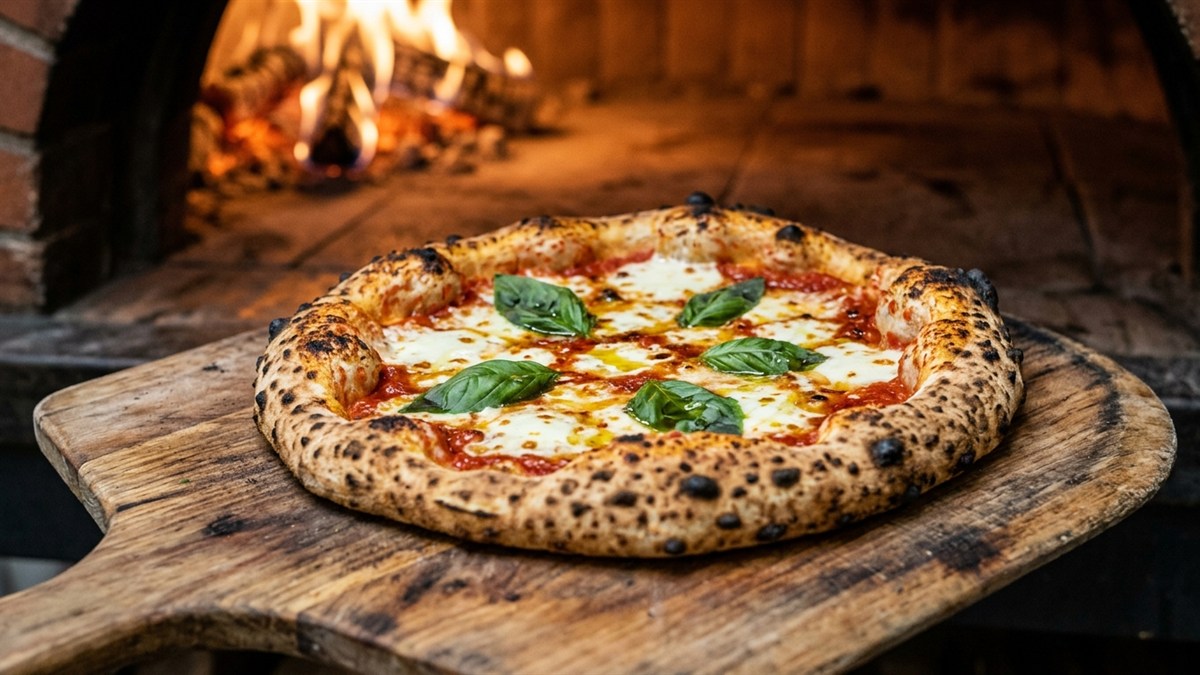
An authentic artisan pizza crust, by contrast, is a textural masterpiece. Known in Italian baking as the cornicione, the outer rim rises dramatically under intense oven heat, forming large, irregular air pockets (alveoli). When you bite into an artisan sourdough crust, the exterior shell shatters with a delicate, audible crunch, yielding immediately to an airy, cloud-soft, pillowy interior. The crust has so much natural savory depth that diners eat every last bite—crust included.
3. The Baking Method: Metal Conveyor Screens vs. Scorching Stone Hearths
How a pizza is baked dictates its final character. Regular commercial pizza outlets rely on mechanical conveyor belt ovens. The unbaked pizza is placed onto a metal mesh screen and conveyed slowly through an electric heating chamber over six to eight minutes. While convenient for high-volume automated kitchens, metal screens cannot transfer heat rapidly. As a result, the bottom crust is often pale, soft, or oily, while toppings can dry out from prolonged exposure.
Artisan pizza demands the intense thermal shock of a stone-baked pizza oven. At Roast Aroma, our pizzas are transferred via wooden peels directly onto the porous volcanic stone floor of our oven, heated to scorching temperatures exceeding 350°C. The blazing stone instantly transfers intense heat directly to the base of the dough, vaporizing internal moisture into steam within seconds. This rapid expansion creates explosive oven spring, baking the pizza in just minutes while developing aromatic charred blisters (leopard spots) that impart an authentic rustic smokiness.
4. The Toppings: Processed Cheese Analogues vs. Fresh Ingredients
The ingredient quality on a regular pizza is frequently compromised for cost and shelf life. Many commercial chains use shelf-stable processed cheese blends containing palm oil, emulsifiers, and starch fillers rather than pure dairy mozzarella. Tomato sauces are often pre-cooked commercial purées loaded with high-fructose corn syrup, preservatives, and artificial seasoning.
In our artisanal kitchen, ingredient integrity is uncompromising:
- Authentic Mozzarella: We use fresh, high-moisture mozzarella cheese derived from pure milk. When stone-baked, it melts into creamy, golden pools with a tender stretch and clean, milky sweetness without leaving greasy oil slicks.
- Slow-Simmered Tomato Sugo: Our sauce is prepared fresh using rich, sweet plum tomatoes seasoned with extra virgin olive oil, sea salt, fresh garlic, and aromatic basil.
- Hand-Prepared Fresh Produce & Meats: Freshly sliced button mushrooms, crisp bell peppers, sweet corn, marinated paneer, and tender grilled herb chicken breast rather than processed frozen toppings.
5. Craftsmanship: Machine Automation vs. The Hand of the Pizzaiolo
Finally, the human element separates the two worlds. In commercial pizza chains, dough is often flattened using heavy mechanical dough press rollers or pre-formed frozen discs. This mechanical pressing crushes all air bubbles out of the dough, guaranteeing a flat, dense texture.
Artisan pizza is handcrafted by an attentive pizzaiolo. Each cold dough ball is gently opened by hand on a floured marble counter using fingertip pressing and gentle stretching. This technique pushes expanding air bubbles outward toward the rim, preserving the delicate honeycomb structure that inflates into an airy crust during stone baking. Every artisan pie is unique, reflecting the care and passion of its creator.
Why Food Lovers in South Bengaluru Choose Roast Aroma
Diners across Banashankari 6th Stage, Vajarahalli, Kanakapura Road, and RR Nagar appreciate the tangible difference when dining at Roast Aroma. You can taste the authenticity in every slice, enjoying food that feels nutritious, flavorful, and celebratory. Complement your pizza with our wider casual dining menu, including our gourmet brioche burgers, Italian-inspired pastas, and fresh specialty Arabica coffee.
Frequently Asked Questions About Artisan Pizza
Does artisan pizza take longer to prepare than regular pizza?
While the dough takes 48 hours to ferment, baking an artisan pizza in our stone hearth oven takes only a few minutes once ordered. Because our oven operates at high temperatures, your pizza arrives piping hot, fresh, and perfectly blistered.
Can I customize pizza toppings on artisan pizzas?
Yes. We offer an extensive selection of fresh vegetarian and non-vegetarian gourmet toppings, allowing guests to customize their pizza with extra mozzarella, fresh vegetables, grilled chicken, or customized spice profiles.
Is stone-baked sourdough pizza available for takeaway?
Yes. All of our artisan sourdough pizzas can be ordered for takeaway. We use ventilated boxes to preserve crust crispiness. Call us at +91 91410 51702 to place your order.
Taste Authentic Artisan Pizza Today
Ready to experience the real difference of authentic stone-baked sourdough pizza? Visit Roast Aroma Café & Pizzateria at No. 213, Vajarahalli Main Road, Banashankari 6th Stage, 7th Block Sompura, Bengaluru – 560060. Explore our Roast Aroma Menu, call us at +91 91410 51702, or drop in daily from 8:00 AM to 11:30 PM to savor artisan pizza at its finest.